Showing posts with label book review. Show all posts

Sunday, May 6, 2018

The Sea Wolf, a review of the 1904 novel by Jack London


533823 917894

The Sea WolfThe Sea Wolf by Jack London
My rating: 4 of 5 stars

Action drama from the beginning of last century doesn't sound particularly relevant or credible, but this was certainly a thought provoking read from a writer of considerable fame.

London has arranged a salty tale of challenge and misadventure as the backdrop for some weighty moral issues which are given voice in two main characters. If you enjoy a salty yarn set on the high seas with plenty of sailor-speak and lots of rigging and navigation issues, then this will do you. If you want some fine literary references and some energetic tossing around of the biggest of big questions, this will also do you. The book has considerable relevance still with regard to the issue of whether 'might is right'.

The author probably takes us a turn too far when he introduces romance into what is almost a Robinson Crusoe moment in the last part of the book, but that is pleasant enough too.


View all my reviews

 There are many editions of this old classic. Here is the Goodreads Blurb about the book;

The Sea Wolf

 4.02  ·   Rating details ·  20,702 Ratings  ·  1,068 Reviews
The novel begins when Van Weyden is swept overboard into San Francisco Bay, and plucked from the sea by Larsen's seal-hunting vessel, the Ghost. This ship's evil captain, Wolf Larsen - The Sea-Wolf - is a murderous tyrant who uses his superhuman strength to torture and destroy, his brilliant mind to invent sick games, and his relentless will to control his mutinous crew. Pressed into service as a cabin boy by the ruthless captain, Van Weyden becomes an unwilling participant in a brutal shipboard drama. Larsen's increasingly violent abuse of the crew fuels a mounting tension that ultimately boils into mutiny, shipwreck, and a desperate confrontation. 


Thursday, April 19, 2018

Go Set a Watchman, a review of Harper Lee's Novel

Go Set a WatchmanGo Set a Watchman by Harper Lee
My rating: 4 of 5 stars

Put aside the wild and varied discussions this book created when published. I couldn't bring myself to read it at the time, and I'm grateful for the distance I had in reading it now. However and whenever this was written, and for whatever purpose it was published, it is simply beautiful.

Lee brings us into the home in this one, people of decency and culture and fine intellect are placed under the urgent microscope of a gorgeous outsider, an idealistic misfit born of the most respected man in town. We are left with a wonderful portrait of the South, the baggage that comes from deep history there, and some of the ways that people of good will tried to make sense of race and all the complications of a riven society.

The prose is delicious with many subtle literary references. The last half of the book will make you want to dog-ear many pages with passages to come back to. This one will stay a while in my mind.


View all my reviews

The blurb on Goodreads says:

From Harper Lee comes a landmark new novel set two decades after her beloved Pulitzer Prize-winning masterpiece, To Kill a Mockingbird. Maycomb, Alabama. Twenty-six-year-old Jean Louise Finch--"Scout"--returns home from New York City to visit her aging father, Atticus. Set against the backdrop of the civil rights tensions and political turmoil that were transforming the South, Jean Louise's homecoming turns bittersweet when she learns disturbing truths about her close-knit family, the town and the people dearest to her. Memories from her childhood flood back, and her values and assumptions are thrown into doubt. Featuring many of the iconic characters from To Kill a Mockingbird, Go Set a Watchman perfectly captures a young woman, and a world, in a painful yet necessary transition out of the illusions of the past--a journey that can be guided only by one's conscience. Written in the mid-1950s, Go Set a Watchman imparts a fuller, richer understanding and appreciation of Harper Lee. Here is an unforgettable novel of wisdom, humanity, passion, humor and effortless precision--a profoundly affecting work of art that is both wonderfully evocative of another era and relevant to our own times. It not only confirms the enduring brilliance of To Kill a Mockingbird, but also serves as its essential companion, adding depth, context and new meaning to an American classic. 

Hardcover, 278 pages
Published July 14th 2015 by HarperCollins
Original Title
Go Set a Watchman
ISBN
0062409859 (ISBN13: 9780062409850)
Edition Language
English
setting
Maycomb, Alabama (United States) 

Friday, April 6, 2018

The Picture She Took- a review of the novel

The Picture She TookThe Picture She Took by Fiona Shaw
My rating: 4 of 5 stars

A very satisfying read, interesting for the obscure insights into the 'Troubles' in Ireland, and the tensions in the lives of two characters brought together by chance. The author sets us for a quest and a potential romance, but is skilful in avoiding a sentimental, easy route. Ethics and behaviour are set against each other and the things permissible in war are tested through the lens of peace.


View all my reviews

The blurb on Goodreads about this book:

Set in England after the Great War, and Ireland after the Black and Tan War, The Picture She Took is a detective story. It interweaves the lives of an impatient and frustrated young woman whose life came alive in a bombed-out village during the First World War and a haunted young man whose memory returns again and again to the traumatic events of a day on a road in Ireland. This searching, beautiful novel is about the wars we wage against others and against ourselves; it is a powerful story of memory, flight and desire.

Friday, March 30, 2018

Eleanor Oliphant is Completely Fine - a review of the book


Eleanor Oliphant Is Completely FineEleanor Oliphant Is Completely Fine by Gail Honeyman
My rating: 5 of 5 stars

This wonderful book is dark and light in shifting measures. It is at once amusing, thoughtful, utterly disturbing, outrageously down to earth, intellectually piercing, socially banal, awkward and uplifting. All of that unfolds beautifully to develop the main character, permitting us to be with her as she manages the pivotal moments that release her from a dreadful inner turmoil.


View all my reviews

35274766

The blurb on Goodreads says:

No one's ever told Eleanor that life should be better than fine. 

Meet Eleanor Oliphant: She struggles with appropriate social skills and tends to say exactly what she's thinking. Nothing is missing in her carefully timetabled life of avoiding social interactions, where weekends are punctuated by frozen pizza, vodka, and phone chats with Mummy. But everything changes when Eleanor meets Raymond, the bumbling and deeply unhygienic IT guy from her office. When she and Raymond together save Sammy, an elderly gentleman who has fallen on the sidewalk, the three become the kinds of friends who rescue one another from the lives of isolation they have each been living. And it is Raymond's big heart that will ultimately help Eleanor find the way to repair her own profoundly damaged one. 

Smart, warm, uplifting, Eleanor Oliphant is Completely Fine is the story of an out-of-the-ordinary heroine whose deadpan weirdness and unconscious wit make for an irresistible journey as she realizes, The only way to survive is to open your heart...

Saturday, December 16, 2017

all the light we cannot see; a review of the novel


All the Light We Cannot See by Anthony Doerr
My rating: 5 of 5 stars

This book made a big splash and has been reviewed extensively. An analysis by me will add nothing of significance to all this, but there are a couple of things about my experience of reading it that I'd like to record.

Doerr has written invisibly to me in the sense that I wasn't aware of any writing at all, just pictures, situations, ideas, connections, people and story. It felt like a very big and generous story, lacking nothing, laced together in overlapping time periods and contrasting mind sets. The author had me hooked by the end of the first page and won't let go even as I try to get into another book.

Highly recommended


View all my reviews


the blurb on Goodreads:


Winner of the Pulitzer Prize, a New York Times Book Review Top Ten Book, National Book Award finalist, more than two and a half years on the New York Times bestseller list

From the highly acclaimed, multiple award-winning Anthony Doerr, the stunningly beautiful instant New York Times bestseller about a blind French girl and a German boy whose paths collide in occupied France as both try to survive the devastation of World War II.

Marie-Laure lives in Paris near the Museum of Natural History, where her father works. When she is twelve, the Nazis occupy Paris and father and daughter flee to the walled citadel of Saint-Malo, where Marie-Laure’s reclusive great uncle lives in a tall house by the sea. With them they carry what might be the museum’s most valuable and dangerous jewel.

In a mining town in Germany, Werner Pfennig, an orphan, grows up with his younger sister, enchanted by a crude radio they find that brings them news and stories from places they have never seen or imagined. Werner becomes an expert at building and fixing these crucial new instruments and is enlisted to use his talent to track down the resistance. Deftly interweaving the lives of Marie-Laure and Werner, Doerr illuminates the ways, against all odds, people try to be good to one another.

Doerr’s “stunning sense of physical detail and gorgeous metaphors” (San Francisco Chronicle) are dazzling. Ten years in the writing, a National Book Award finalist, All the Light We Cannot See is a magnificent, deeply moving novel from a writer “whose sentences never fail to thrill” (Los Angeles Times).
 (less)

Saturday, December 9, 2017

Sapiens by Yuval Harari, a review of the book


Sapiens: A Brief History of Humankind by Yuval Noah Harari
My rating: 4 of 5 stars

The story of our arrival as a species , the turning points that tripped us into the type of animal capable of imagining a future, the singular moments in that story and the possible culminations of it; these are not things that can be elaborated easily in a single book without leaving gaps or making controversial claims.

Every thoughtful person will struggle with at least some of Harari's conclusions, but he is careful to present a direct and balanced picture of the scholarship on each issue before putting his own view forward. His intention is to provoke a thoughtful response about issues that concern all of us and his thoughts on the directions for our species which now seem inevitable to him are chilling, but arguable.

I admire big picture academics, even more now after reading one of his conclusions- that the central issue that we need to address is not 'what do we want' as a future, but 'what do we want to want?', because there is no consensus on the role, path or limits of progress in this technological revolution that we find ourselves in.

Progress into ethically challenging areas- areas that may require us to redefine 'humanity'- is virtually unsupervised and globally more potent than at any of the critical points which brought us to our present. We are entitled to wonder- 'who is at the helm?'


View all my reviews

The blurb on Goodreads;


100,000 years ago, at least six human species inhabited the earth. Today there is just one. Us. Homo sapiens. 

How did our species succeed in the battle for dominance? Why did our foraging ancestors come together to create cities and kingdoms? How did we come to believe in gods, nations and human rights; to trust money, books and laws; and to be enslaved by bureaucracy, timetables and consumerism? And what will our world be like in the millennia to come?

In Sapiens, Dr Yuval Noah Harari spans the whole of human history, from the very first humans to walk the earth to the radical – and sometimes devastating – breakthroughs of the Cognitive, Agricultural and Scientific Revolutions. Drawing on insights from biology, anthropology, paleontology and economics, he explores how the currents of history have shaped our human societies, the animals and plants around us, and even our personalities. Have we become happier as history has unfolded? Can we ever free our behaviour from the heritage of our ancestors? And what, if anything, can we do to influence the course of the centuries to come?

Bold, wide-ranging and provocative, Sapiens challenges everything we thought we knew about being human: our thoughts, our actions, our power ... and our future.
 

Monday, November 6, 2017

Rifling Paradise; a review of the novel

Rifling ParadiseRifling Paradise by Jem Poster
My rating: 4 of 5 stars

The beginning of this story is quite dark, as our central character reveals attributes that might make for a sordid sort of tale, but the writing was crystal clear and the quality of the prose led me to keep reading. I'm very glad I did.

The novel is really well paced, somehow suggesting very complex plot development, but delivering a trim and precise tale that ends more quickly than seemed possible. It is scattered with moments of real tension as the author uses the story to contrast several different character types, all responding to the cultural paradigms of the time- some characters stuck within them and some managing to grow through them. A very satisfying read.


View all my reviews


the blurb on Goodreads says:

A gripping thriller set in the wilds of nineteenth-century Australia by the critically acclaimed author of Courting Shadows. 
When past indiscretions catch up with Charles Redbourne, a minor English landowner, he is propelled from England to Australia, where he plans to make his mark as a naturalist. There, his life begins to change dramatically, not least when he meets his host's wayward, artistic daughter. But it is on an expedition in search of scientific specimens in the Blue Mountains that events take a terrifying turn. Vividly conveying the unspoken codes of Victorian society, this is a gripping tale of emotional and psychological reckoning that offers an inspired meditation on the relationship between humankind and the natural world.

Friday, September 15, 2017

The orphan's Tale- a book review


The Orphan's TaleThe Orphan's Tale by Pam Jenoff

My rating: 3 of 5 stars

This was a good story, sometimes as dark and disturbing as life under the influence of the Third Reich would have been and it was enriched by the convergence of several personal recoveries from hurt and tragedy.

We read the book alternating two first person voices and this device was the cause of some frustration for me. I found the dialogue a bit clunky, mixed as it was with personal thoughts and feelings and I fear that there was insufficient contrast between the two voices to allow me to identify with each narrator as we changed chapters.

For me the strongest prose and the most convincing revelation of character was in the epilogue. In this a single voice ties the whole story together from the recollection of a much older person. This final chapter helped overcome some of my negative feelings.


View all my reviews


The blurb on Goodreads:

A powerful novel of friendship set in a traveling circus during World War II, The Orphan's Tale introduces two extraordinary women and their harrowing stories of sacrifice and survival.


Sixteen-year-old Noa has been cast out in disgrace after becoming pregnant by a Nazi soldier and being forced to give up her baby. She lives above a small rail station, which she cleans in order to earn her keep. When Noa discovers a boxcar containing dozens of Jewish infants bound for a concentration camp, she is reminded of the child that was taken from her. And in a moment that will change the course of her life, she snatches one of the babies and flees into the snowy night.

Noa finds refuge with a German circus, but she must learn the flying trapeze act so she can blend in undetected, spurning the resentment of the lead aerialist, Astrid. At first rivals, Noa and Astrid soon forge a powerful bond. But as the facade that protects them proves increasingly tenuous, Noa and Astrid must decide whether their friendship is enough to save one another - or if the secrets that burn between them will destroy everything.

Monday, September 4, 2017

The Wonder: a book review

The WonderThe Wonder by Emma Donoghue
My rating: 4 of 5 stars

This book has a slow fuse and the plot sizzles very quietly and seems muffled through the early parts of the book. There is a point though, where everything changes and things suddenly seem to have many possible paths on the way to some sort of resolution. The slow fuse works well as an important device in the narrative, if you stick with the author.

I found the story socially interesting and in the end very satisfying, although Irish people may find themselves bristling under their collars from time to time-either in denial or embarrassment. The story represents very much a superior British kind of attitude, quite typical of the time, but challenging nonetheless. I can't help wondering how the story would feel if an Irish nurse faced a similar situation at a similar time in the back streets of inner London, but that would deny us the necessary remoteness of the influence of Florence Nightingale, and the particularly Roman Catholic excesses of the time which do make for a robust plot. Either way, it doesn't matter in judging a good read, and this is one.


View all my reviews


The intro blurb on Goodreads says:

In the latest masterpiece by Emma Donoghue, bestselling author of Room, an English nurse brought to a small Irish village to observe what appears to be a miracle-a girl said to have survived without food for months-soon finds herself fighting to save the child's life.

Tourists flock to the cabin of eleven-year-old Anna O'Donnell, who believes herself to be living off manna from heaven, and a journalist is sent to cover the sensation. Lib Wright, a veteran of Florence Nightingale's Crimean campaign, is hired to keep watch over the girl.

Written with all the propulsive tension that made Room a huge bestseller, THE WONDER works beautifully on many levels--a tale of two strangers who transform each other's lives, a powerful psychological thriller, and a story of love pitted against evil.

Wednesday, August 23, 2017

A book about Matthew Flinders at sea

The following is the introductory blurb on Goodreads...I haven't reviewed this book yet. I enjoyed it and gave it four stars.


Flinders: The Man who Mapped Australia

 4.09  ·   Rating details ·  87 Ratings  ·  11 Reviews
The exciting story of Matthew Flinders the man who named Australia and the first to chart its coastline.

Matthew Flinders is a towering figure in Australian history; the first to chart our coastline and the leading champion for naming the country Australia. In 1801 he was made commander of the expedition of his life, the first close circumnavigation of Terra Australis.

Famous for his meticulous charts and superb navigational skills, Flinders was a very fine sailor. He battled treacherous conditions in a boat hardly seaworthy, faced the loss of a number of his crewmen and, following a shipwreck on a reef off the Queensland coast, navigated the ship's cutter over 1000 kilometres back to Sydney to get help.

Rob Mundle brings Matthew Flinders fascinating story to life from the heroism and drama of shipwreck, imprisonment and long voyages in appalling conditions, to the heartbreak of being separated from his beloved wife for most of their married life.

This is a gripping adventure biography, in the style of BLIGH: MASTER MARINER.
 

Saturday, June 24, 2017

A Fine Balance- a review of the novel by Rohinton Mistry

A Fine BalanceA Fine Balance by Rohinton Mistry

My rating: 5 of 5 stars


It is sometimes a bit daunting to become involved in such a fat book with such small print when it describes a culture with which you are relatively unfamiliar. I'm so glad I did, despite a slow engagement.
Histories are often written from the point of view of the broom while literature often gives insights from the dust being swept aside. Most of us are as dust, but there can be dignity and life in that, and this is a story of dignity in simplicity and of the possible joy in a moment when even the most ordinary securities of society are being swept from beneath your feet.
Mistry has crafted a huge tale from meagre lives without being overly romantic or sentimental, indeed he is sometimes grim and brutal, tearing at the minor triumphs of the individuals we are reading about, and leaving us feeling bereft.
The book demonstrates how it can be that resilience is not dependent upon privilege, and that acceptance can out-manouver expectation as a tool for survival.


View all my reviews

A Fine Balance on Goodreads

 4.34  ·  Rating Details ·  103,463 Ratings  ·  7,142 Reviews
With a compassionate realism and narrative sweep that recall the work of Charles Dickens, this magnificent novel captures all the cruelty and corruption, dignity and heroism, of India.

The time is 1975. The place is an unnamed city by the sea. The government has just declared a State of Emergency, in whose upheavals four strangers--a spirited widow, a young student uprooted from his idyllic hill station, and two tailors who have fled the caste violence of their native village--will be thrust together, forced to share one cramped apartment and an uncertain future.

As the characters move from distrust to friendship and from friendship to love, A Fine Balance creates an enduring panorama of the human spirit in an inhuman state.
 

Monday, May 15, 2017

Penelope Down East: a review of a gentle sailing book

Penelope Down East: Cruising Adventures in an Engineless Catboat Along the World's Most Beautiful CoastPenelope Down East: Cruising Adventures in an Engineless Catboat Along the World's Most Beautiful Coast by W. R. Cheney
My rating: 4 of 5 stars

This isn't your ripping yarn of nautical struggles, near starvation or wild adventure- it is much gentler than that. Cheney has a modest boat of lovely proportions and these are collected essays from his cruises around some of America's most notable sailing destinations. His cat boat 'Penelope' has no motor and this determines his comings and goings as he responds to the weather, choosing this way over that on a whim, or more correctly, on the hope of a puff. It is the craft of this very thing that sets him apart from most of the people with whom he shares the water. He takes great pride in the skills required to forego automatic propulsion, and he is open and honest in recording his lapses and his very minor humiliations, but equally frank in revealing that little devil (present in many sailors) who simply can't resist the opportunity to show a bigger, flashier boat the charms of Penelope's stern from an increasing distance.

I don't think I learned much about Maine as an outsider, although many of the names are familiar in lore and in the names of various famous boat designs. The charts provided were very small, but in any case I wasn't hoping for a geography lesson, just to read of the daily tasks and minor challenges faced alone in these waters, and to glean something of the sensation and the emotional quality of his wanderings. These are the things that cause you to put the book aside for a moment and just feel it all with him.

This isn't a story, or even an adventure. It is a contemplation of all that is beautiful and solid and craftsmanlike in sailing simply and skilfully, and giving yourself the best chance of really appreciating the water and it's edges before these places are all developed into blandness.
I will put this copy in our boat, to be dipped into when the moment seems right. After the first reading, any chapter will take me somewhere.


View all my reviews

Sunday, April 30, 2017

A Big Pulitzer Prize Winner

The Amazing Adventures of Kavalier & ClayThe Amazing Adventures of Kavalier & Clay by Michael Chabon
My rating: 4 of 5 stars

The book has heft and it comes with big expectations too, because it was a Pulitzer Prize winner.
My first impressions were of very wordy, dense and descriptive passages packed with ideas and delivered by a very competent wordsmith. The scope of the author's imaginings is vast and fast and very suited to the times portrayed. It is the Big American Novel about the Big American Twentieth Century Project- dealing with opportunity, deprivation, motivation and immigration. Also of magic and art and popular culture, Depression, and sexuality. Behind all this fizzes the issue of not being in a war as well as finally being in a war- and then moving on.

Clever writing, great character development and good pace weren't enough to engage me fully on an emotional level though, and I'm more than ready for a new read.


View all my reviews

Friday, March 10, 2017

Ice Letters. A review of the novel


Ice LettersIce Letters by Susan Errington
My rating: 4 of 5 stars

Loss, longing and a feeling of being adrift in a sea of helplessness pervade this charming story set in Australia and The Antarctic during the first World War. The moral dilemmas confronting humanitarian and thoughtful people are particularly pertinent now. We don't often read about the pacifists of the era, nor of the more extreme elements pushing for a new socialist world order, but however these movements ultimately evolved, ordinary people of good will were carried along with them in a wave of hope simply because they could not accept the path chosen by their own governments.

This is a beautifully written story on several levels. The personal journeys of two people in particular are set in a challenging and very interesting context.


View all my reviews

Sunday, February 26, 2017

The Venturesome Voyages of Captain Voss. A Review


The Venturesome Voyages of Captain VossThe Venturesome Voyages of Captain Voss by John Claus Voss
My rating: 4 of 5 stars

Captain Voss was an early and enthusiastic exponent of the use of sea anchors, particularly for small boats on very big voyages. This book contains several of these ground-breaking small boat voyages, narrated with panache and an eye not only for weather and sail trimming detail, but some acute observations of humanity in his descriptions of crew under pressure.
Written at the very start of the 20th Century, the book reveals aspects of the world that are now so utterly different- as are his very Euro-centric views about the peoples of the places he visited, but he was a generous man very much of his time.

Highly recommended for 'armchair' and other sailors, this is very readable. There are several editions about, mine was a hardcover lent to me which had an interesting introduction by Richard Hughes. Published by Rupert Hart-Davis, London in 1955. There are more recent editions.


View all my reviews

Wednesday, January 4, 2017

The Kingdom by the Sea. A review

It was 1982, the summer of the Falkland Islands War, and the birth of the royal heir, Prince William--and the ideal time, Theroux found, to surprise the British into talking about themselves. The result is a candid, funny, perceptive, and opinionated travelogue of his journey and his findings. Cultural snobbery? Perhaps, but it is always interesting to read about interesting times.


The Kingdom by the Sea The Kingdom by the Sea by Paul Theroux
My rating: 4 of 5 stars

Paul Theroux has insights here that are perhaps more interesting for the passing of so much time than they were when he wrote them. Always engaging and pithy, he brings some objectivity by describing Britain through the eyes of a traveling alien.

These are brutally wrought observations of an island in disrepair, even existential despair, and it is a bleak and pallid culture exposed by the failure of industry and the punishments delivered by globalisation, but it is not without warmth and empathy.

The book is written at the same time that his friend, an Englishman Jonathan Raban was circling Britain in a sailing boat, making observations of his own. Whereas Theroux is walking and riding trains around the coast observing the population sitting idle and looking outwards, Raban is looking landward from the perspective of the sea. Raban's account (Coasting: A Private Voyage) is far more concerned with the causes of economic failure, and is attuned to the suffering that comes from economic idleness, whereas Theroux focusses on his perceived flaccidity of the population in the face of these factors.

Both books focus on the year 1982, with thirteen per cent unemployment, huge failure of coal and fishing industries, the beginning of the end of ship building and automotive industries, the Falklands War and the unpopular unraveling of the complex and ancient British railway network.

Both books are limited of course by the personal views of the observers, but they benefit greatly from many quoted conversations with ordinary folk facing the future bravely. I enjoyed both books, but I would find this one tough going if I were a patriotic Brit.


View all my reviews

Wednesday, December 7, 2016

the Cruise of the Teddy

The Cruise of the Teddy (The Mariner's Library)

really liked it·  
In 1928, Erling Tambs and his bride set off from Norway in the old pilot cutter Teddy, with no sextant or barometer, and only one and sevenpence in small change. They had no special destination and no urgency, but it was the beginning of three years of adventurous and often accident-prone sailing amongst islands in two oceans. At Vigo the crew of two was increased by the gift of a dog, Spare Provisions, and at Las Palmas by the birth of Tony, and in New Zealand by a daughter, Tui. Moments of high drama occurred, too: the Tambs family were in New Zealand at the time of the great earthquake of 1931, and they were also forced to endure a terrifying and disastrous shipwreck. But the charm of the narrative lies in the delightful picture of the Tambs family afloat, and in their encounters with people and places in the more exotic corners of the world. 
Paperback, 182 pages
Published 1989 by Grafton

The Cruise of the Teddy (The Mariner's Library)The Cruise of the Teddy by Erling Tambs
My rating: 4 of 5 stars

A charming account from a simpler time. Modern sailors will enjoy the plentiful references to sail management without the insurance of motor back-up. Four stars.


Tuesday, October 18, 2016

Poldark's Cornwall

While boats are in the background of this story, it is a very coastal type of tale and worth a read if you have avoided it for all these years...


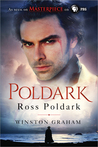
Ross Poldark (Poldark, #1)Ross Poldark by Winston Graham
My rating: 5 of 5 stars

Re-reading this book after 40 years and having seen two versions on television, I wasn't expecting to be deeply engaged, but what I had forgotten- and what you don't get in a filmed interpretation- is the wonderful quality of the author's writing and the sensitivity of his observation.

It is still a ripping tale about the lives of folk in various classes in Cornwall during the late 18th Century but it is also a timeless tale about moments and interactions which resound with our own experiences of living.

The last four paragraphs of this novel are surely as perfect a conclusion as it is possible to write.


View all my reviews

Sunday, August 28, 2016

The Blind Side of the Heart - a review of the novel.

The Blind Side of the HeartThe Blind Side of the Heart by Julia Franck
My rating: 4 of 5 stars

This is a bleak but powerful drama drawn at the personal rather than national level, the events of the interwar period in Berlin sliding past uncommented upon. We live the consequences of them in this novel instead.
Franck's prose is intimate and energetic with a rhythm that accounts for life in its finely textured moments. The main character Helene is the victim of parents who are unable to deal with one catastrophe and the narrative is of her attempts to cope with that and survive another.
If there is something engagingly historical in this story it is the timely reminder that intergenerational human dislocation is inevitable when world politics fails to rein in the bullies.

View all my reviews

Tuesday, July 19, 2016

The Midnight Watch

I enclose my Goodreads review of this book by David Dyer about the 'side story' of inaction by a nearby ship when Titanic struck an iceberg and failed to recover. He has researched the characters and actions that  turned a maritime accident into a human disaster.

The Midnight Watch: A Novel of the Titanic and the CalifornianThe Midnight Watch: A Novel of the Titanic and the Californian by David Dyer
My rating: 4 of 5 stars

I wasn't particularly interested in an analysis of the events surrounding the Titanic story, but I was rather captivated by the failures that made it such a disaster.
The unfathomable distortions of a truth, or maybe just the exploration of the impossibility of truth as memory lie just beneath this fictional rendition based upon actual events and people in the sinking of Titanic and the loss of so much life- apparently unnecessarily. The book explores the terrible inaction of a nearby ship when Titanic was damaged and unable to recover.
In the last pages Dyer masterfully resolves a lifetime of focus by a fictional newspaper journalist who struggled for decades to explain the human failures at the heart of the tragedy, and did so finally by understanding that human action takes place within a lived emotional and psychological context.


View all my reviews